


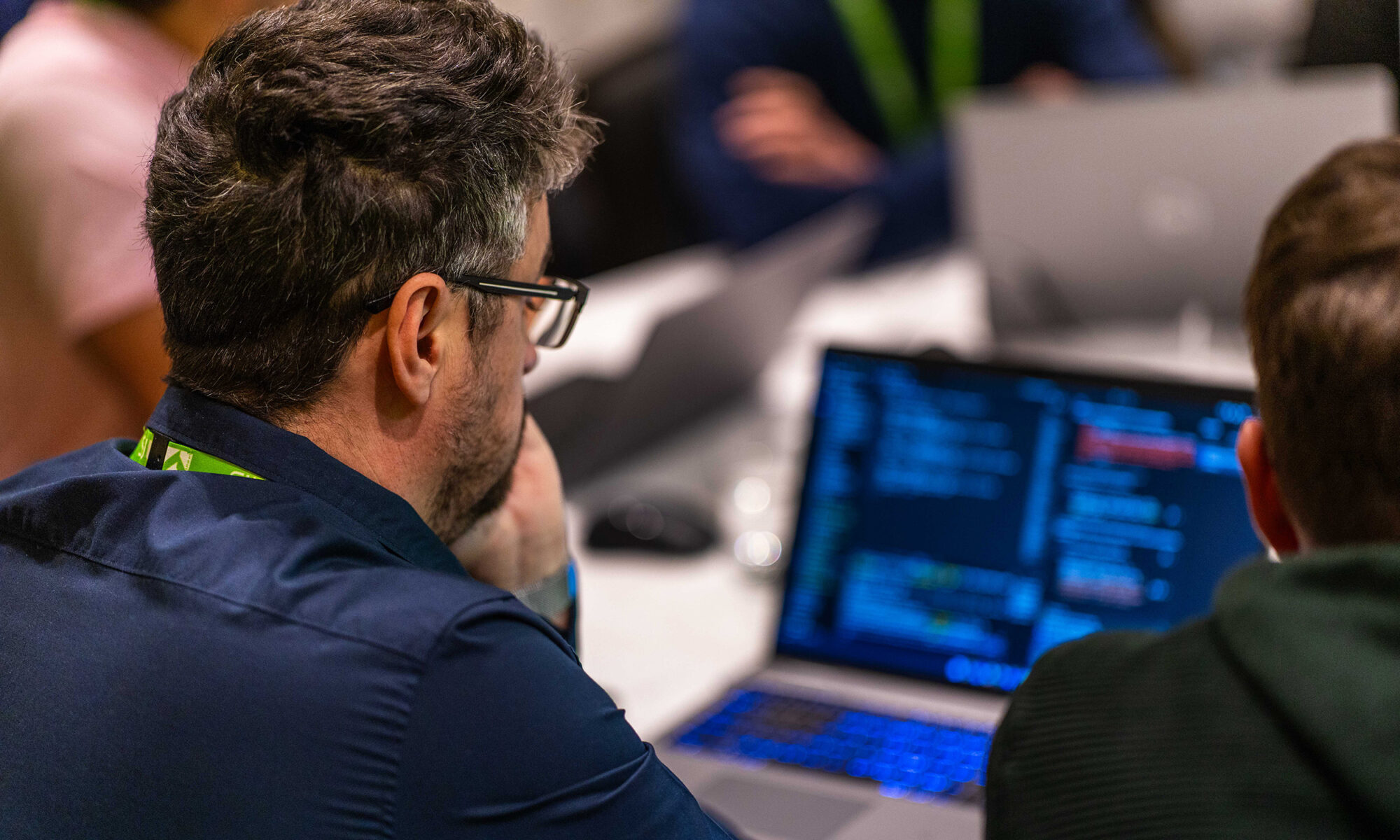








How the learning program is moving businesses toward AI enablement
A mindset shift is frequently the first step to showing people their full capabilities before unlocking the increased revenue potential within a business.
So when Volaris Group’s Business Transformation team was looking at how they can best enable acquired businesses to maximize their potential, they looked closely at how the latest artificial intelligence technologies could be incorporated in a new company-wide learning program.
The result? A new Developer Program to upskill software engineers with access to AI tools and learning materials, spread AI-first thinking, and integrate an AI-first culture into company culture through peer group conversations.
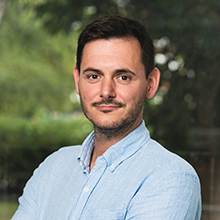
James Whiting is one of the people leading the Developer Program and moderating discussions.
Having worked in operations for Volaris-owned Grosvenor Systems for several years, he’s built his credibility among Volaris businesses who have benefited from his guidance and relate to his background as an operations leader. Whiting’s own career path within the Volaris ecosystem took an intriguing turn in 2025 when he accepted a year-long secondment to the Business Transformation team.
Since then, he’s vastly expanded his thinking about how to boost AI enablement within businesses. He spoke to Acquired Knowledge about his work leading the program.
What is the Volaris Developer Program?
The program involves cohorts of between four to six Volaris businesses. It asks for a commitment from the business over a period of six weeks, of around four hours a week for each developer enrolled in the program. The program requires sign-off from the portfolio level of leadership.
During the program, each developer goes through course materials that the Business Transformation team gives them access to, and they have a chance to share and start experiments they are conducting within their business processes, such as a bug-fixing backlog, and to share lessons learned from those experiments that help inform how the business should move forward. They are hands-on with tools and learning about how to make their day-to-day work easier.
This is a transformation exercise that makes its biggest impact when the program is finished. It’s supposed to get developers thinking in a different way so they can take that thinking and run with it in their own experiments. It’s about changing the way their team thinks they can work, with the different tools they can use. The Developer Program is only the first part of the journey with AI, by building foundations for the business to help kick off its next phases of growth.
When we run this program, we ask ourselves, ‘How can this time allow them to be more AI-enabled by experimenting with things or being inspired by what their peers are doing?’
Although the materials are aimed primarily at developers, how are senior leaders at Volaris businesses actively involved in the program?
We see accountability for AI enablement as sitting with the leadership. So we host four meetings for leadership throughout the cohort. The meetings are a discussion consisting of four hours over six weeks with Portfolio Leaders, Group Leaders, Volaris business leaders and R&D leaders.
As a leadership discussion, we are providing a safe space to talk about the good and bad challenges, successes, and a way for Portfolio Leaders to really see how their businesses are thinking—where support might be needed, where people are in different places in their journey, but learn from others in their cohort.
What is covered in each of the leadership discussions?
The leadership meetings are organized around four main goals. They include:
- Introduction and kickoff: Volaris businesses and the cohort all get in a meeting and share expectations. We set goals for what they want to get out of the program, and check that they have access to the materials.
- Addressing blockers and making course corrections: Are business leaders having any resistance within their teams to the tools or the material? This discussion allows time to hear from other Volaris businesses on how the positive may be going, to encourage others who may be experiencing only the negative.
- Discussing progress and initial results: Each Volaris business will show off something their team was able to do that fundamentally changed how their business can work. Examples of this might be writing test cases or possibly using AI in another process that would not be directly revenue-generating, but represents a critical step that allows a team to go faster. During this meeting, we would see R&D leaders sharing their code, or showing an improvement in number of tickets, for example.
- Sharing ROI and AI activation: Volaris business leaders share how they are demonstrating ROI. How are they putting the things they’ve learned into their business workflow, within their development team? How are they moving faster as a business? What commitments are they making to their quarterly goals or their scorecards? What are they doing after the cohorts and the program have finished?
What role does the Business Transformation team and the AI Center of Excellence play behind the program?
Our role is very much one of being the facilitators. We keep the meetings on track. We try to probe with interesting questions and give feedback from our exposure to what we’re doing on the bleeding edge with AI.
The program also puts us in a great place to learn what Volaris people are exploring with respect to AI.
We don’t have all the answers, but we do have a massive interest in making Volaris businesses more successful, and to allow them that route into AI enablement. How can they enable themselves with AI quicker in a way that is fun, where there’s better job satisfaction?
This is a massively fast-moving world where things change, new models drop every day, and it’s really important to keep that curious, open mind.
The Business Transformation team works with AI every day. Where does the team see Volaris businesses going with AI?
Our team, led by Chris Wildsmith, is very external facing. We are looking outward about how VCs are working in the AI space, how different companies in Silicon Valley are operating in this new landscape, what tooling they’re using, how startups are creating products in a fraction of the time with a fraction of the staff, and how that translates back into the business structures that we have.
For example, many Volaris businesses have served customers for a long time and have large, legacy code bases. That is different to startups. But we ask, “What are the best practices that can be taken in from the startup world that can make things go faster for our businesses?”
AI enablement is the North Star of what we’re trying to do here, so that Volaris Group’s businesses can stay ahead of their competition.
The question that a lot of the people in the Business Transformation team ask every day is, “Why isn’t everyone using this or doing this?” It feels like a no-brainer. So we ask how can that mindset can be drawn in a tangible way across multiple Volaris businesses. That change in our businesses won’t come without their mindset shift. Or it may be that their mindsets are already there, and it’s just a matter of locking in resources.
Why is understanding AI important to anyone’s growth as a leader?
AI is not going away. It is here. It has proven in the hands of multiple Volaris businesses that it can enable some amazing and incredible things. It allows people to go faster. It can help with better job satisfaction in the hands of its users.
One leader said, “It’s not if, it’s when” AI will change the way we work, and I think that kind of leadership is absolutely critical in Volaris.
Particularly with the types of businesses Volaris owns, they traditionally have very strong moats. Those moats are still there, but we should capitalize on the tooling that is available to us. If we stand idle and we aren’t moving faster, the world will move on rapidly. So, this program should be the hottest ticket in town.
There may be different reasons why different people may be apprehensive to change. What we found is that for even the staunchest critic, they can find ways to tackle a tough problem when they have their hands on use cases.
What results have you seen from participants after they complete the program?
We’ve seen many developers saying to their R&D leads, “That would have normally taken me months.”
And we’ve had R&D leaders who’ve not written code for years who suddenly feel like they can contribute and make the boat go faster whilst doing all the things they’ve already been doing.
Other positive results we’ve seen from the program include:
- 600 unit tests written in a week by one person, which would have typically taken months to do.
- A log error report combed for a bug in 20 minutes, by using agentic tooling that was taking weeks for a developer to do by hand.
- An intern creating a proof-of-concept mobile app in a couple of days and after a short amount of training.
What is the next challenge for the Business Transformation team as we move businesses toward more mature stages of AI adoption?
The key challenge we must meet is: how do we conceptualize the AI-enhanced workflows into ROI and trackable metrics? That can be a bit of a journey for Volaris businesses, but it’s a really important one.
That’s because their journey needs to move from that kind of anecdote or evidence and good feeling in the team to metric-based success, whether that be a reduction in operating expenditure, or time being freed for somebody to do something which could lead to more revenue. There has to be that output at the end.
For many Volaris businesses, the upside can come from tackling a backlog of customer requests and tasks with revenue-generating potential. Previously, release cycles and development were slower before adoption of AI. If those can increase in velocity, then more features can be released, and customers can spend more of their share of wallet with our businesses.