







Adopting AI workflows has helped inject new energy into teams at SSP, creating lasting change in how they work with each other, relate to customers, and shape their company culture
SSP, a global provider of insurance technology, was experimenting with AI at the start of 2026 in a way that their Director of Product Management, Sucheta Mohan, describes as “dabbling.” Their team was dipping their toes in the water by experimenting, but they didn’t yet have a clear framework for where they were going.
Today, that picture looks very different for the company. Over the course of a year, SSP has used AI to advance its knowledge of how to build and lead product development. In late May 2026, the company launched Pure Product Studio, an AI-powered platform that enables its insurer clients to describe a new product in plain English, then review and approve the structure it generates to bring their product design to life.
SSP’s team has spent the latter half of 2026 taking the product to market. They’ve opened a pilot program with customers running their proofs of concept. As of mid-October, one customer that completed their proof of concept signed on with SSP to take it into product development.
But the change within SSP goes beyond simply product or technological transformation. The company is seeing a full transformation that is evident in how it operates, how it works with customers, and how its people grow.
How the AI Accelerator activated the team
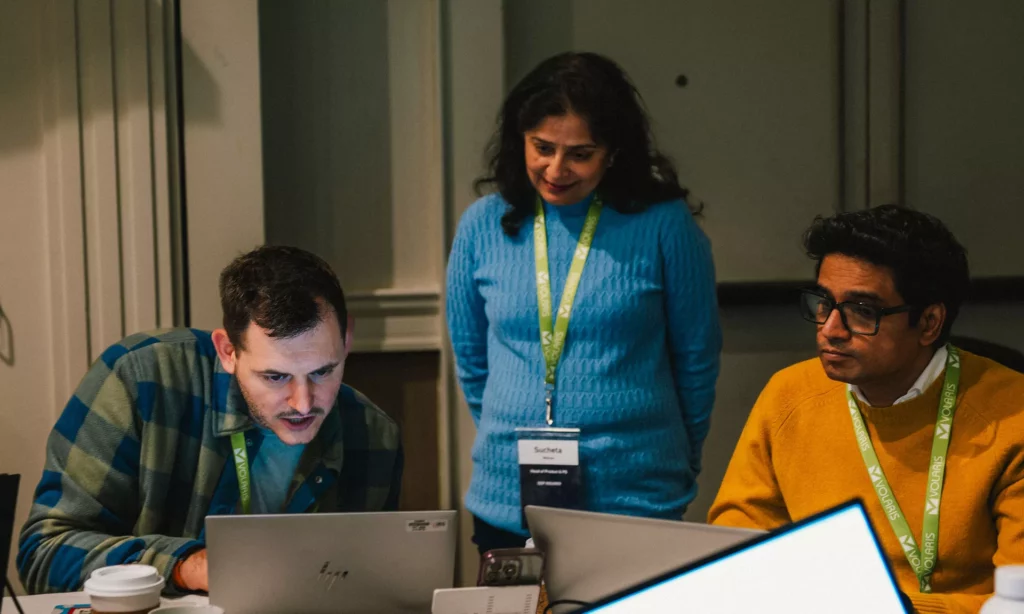
The Volaris AI Accelerator served as a catalyst for many of the team’s activities over the year. Before attending the learning event in March 2026, SSP held customer interviews, a process that helped the team gain a better understanding of customer pain points.
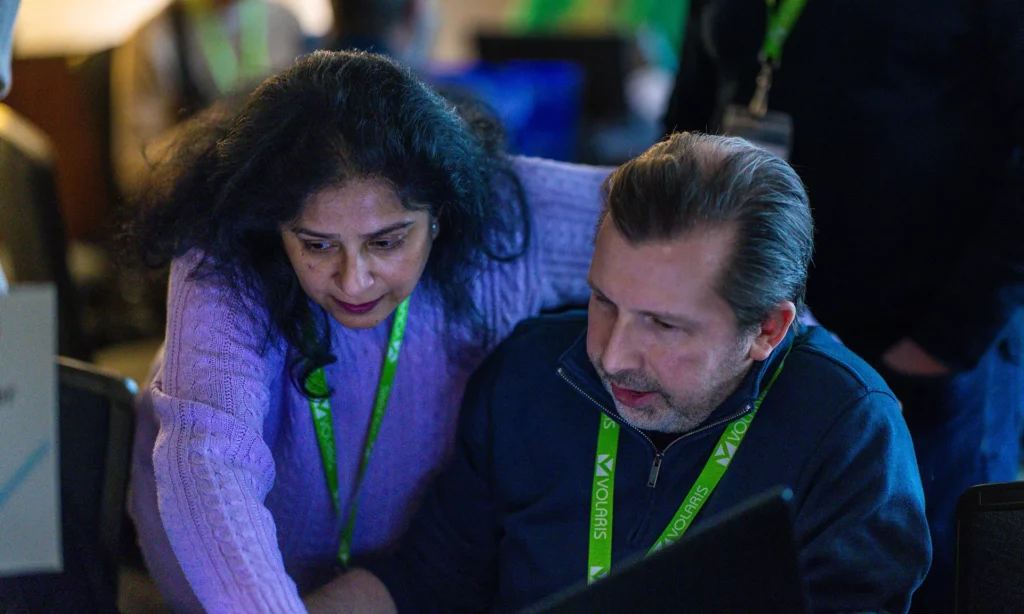
They arrived at the bootcamp-style event in Denver with a handful of ideas, bringing along key personnel including Head of Product Sucheta Mohan, Andrew Wilcock, a Senior Product Architect who was the first to start building, Managing Director Stuart Redfearn, Senior Technical Delivery Manager Rahul Jaiswal, and Nick ____, Head of Engineering. Iain Shillingford was another team member who stayed closely involved, despite not having attended the in-person bootcamp.
“What the AI Accelerator did was give us a framework to move forward with something we’d only been experimenting with,” explained Sucheta.
“Prior to that, we were just dabbling – working through the art of the possible with AI. Having the accelerator gave us the momentum, and it gave us three distinct areas to focus on and build out: leadership, product, and R&D.”
Coaching and mentorship definitely made a difference. We were already using AI before the event, but the training and toolkits from the AI Accelerator opened our eyes to what was actually possible, and gave us a clearer path to get there.
– Rahul Jaiswal, Senior Technical Delivery Manager, SSP
On the development side, the AI Accelerator was also a helpful starting point. “Having Microsoft and AWS coaches on hand meant that we could get a review or a second opinion whenever we needed one, said Rahul Jaiswal, the Senior Technical Delivery Manager. That combination of structured learning and access to expert guidance made the adaptation much faster than going it alone.”
Adopting a framework for company culture transformation
Following their attendance at the AI Accelerator, SSP embarked on an ambitious plan to scale up their AI adoption. SSP runs three company-wide programs, each aimed at a different part of the organization. They are:
- Level Up: Led by the head of engineering, this program is focused on advancing the company to a level of the AI software development lifecycle that involves more automation and agentic workflows.
- Future Forge: Sponsored by the head of HR, this program brings colleagues outside of technical roles, including HR and finance, along for the adoption journey through coaching and creating a learning playground.
- Illuminate: Led by the head of product, this external-facing program is built on four pillars: thought leadership, customer enablement, AI in SSP’s products, and ESG.
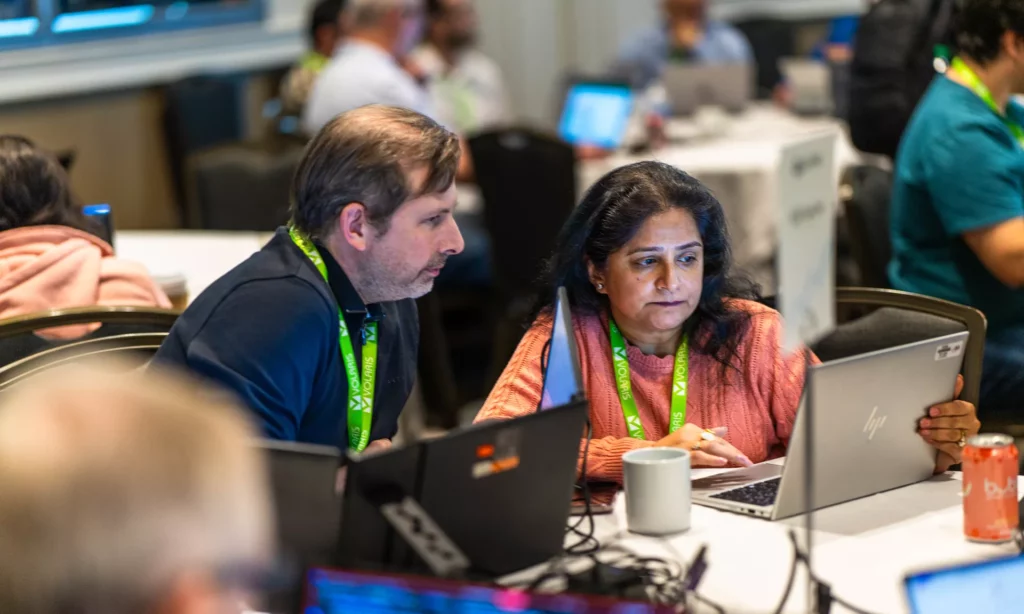
AI has enabled SSP’s work to happen in “an interesting sort of playground for all of us,” says Sucheta. A lesson they learned from the AI Accelerator is that working in small squads with dedicated roles has been very effective.
The nature of the work has shifted too. Many people who were used to writing code themselves are now becoming reviewers, and that is forcing a rethinking of roles. Job profiles within the company need to be updated, and it is a change that can take time for people to understand and get on board with.
Transforming the customer relationship
One of the biggest shifts for SSP is in how the company works with the people it builds for. The product team can now sit down with a customer, draw out what they’re looking for, show a prototype, and send the details to the customer for feedback — with the aim of getting their commitment and building the product together.
“You can clearly see the signal from the customer on whether they’d want to spend money on a proposed product or not,” Sucheta says.
We don’t want to just build something that we think we need to build, but we want the customers to buy into it before we do it.
– Sucheta Mohan, Head of Product, SSP
The product that they started building at the Volaris AI Accelerator was Pure Product Studio, which they pitch as putting product design and strategy back in the hands of the businesses that they serve.

“Our customers are under real pressure to move faster, respond to market shifts, and launch products that meet evolving policyholder needs,” SSP’s Managing Director Stuart Redfearn said in the product launch announcement. “This gives them the tools to do exactly that — turning product ideas into market-ready propositions in days.”
Early interest in the product has been encouraging. After launching the product in late May, SSP had one customer who had completed a proof of concept and four more lined up to start in July. SSP began speaking to industry contacts and many experts in the industry were asking for demonstrations.
By mid-October, another customer that had completed a proof of concept had signed on to take Pure Product Studio into production, and a new customer was close to signing. Mohan says demonstrations have drawn positive reviews. As SSP gets more customers on board, she expects their peers in the industry to follow.
A story of people growth
Rahul Jaiswal, SSP’s Senior Technical Delivery Manager, says AI has been the biggest shift in his career. “It has fundamentally changed how we work. We now think in hours, not days or weeks,” he says of how the team approaches development.
He says the product development process felt different from day one: “We weren’t afraid to be innovative or try new things, and we leaned into approaches like spec-based development before moving to autonomous agentic development, instead of playing it safe with familiar methods.”
For the development team, taking that mindset meant learning as they went along and adapting quickly when something didn’t work. Rahul says the team adopted new ways of working and were able to transition quickly and smoothly.
“Things that used to feel out of reach now feel possible, and the usual barriers aren’t there,” he concludes.
The biggest challenge has been keeping pace with how quickly AI is moving — the ground kept shifting under us.
– Rahul Jaiswal, Senior Technical Delivery Manager, SSP
Adopting agentic workflows meant we were often learning a new way of working before we’d even fully mastered the last one, and there wasn’t always a playbook to follow.
On top of that, he didn’t just have to manage his own learning curve — he had to bring the team along too, and make sure they could adapt at the same speed without feeling left behind.
“We got through it by staying comfortable with not having all the answers upfront, learning by doing, and iterating openly as a team rather than waiting for a perfect approach before taking action,” he shares.
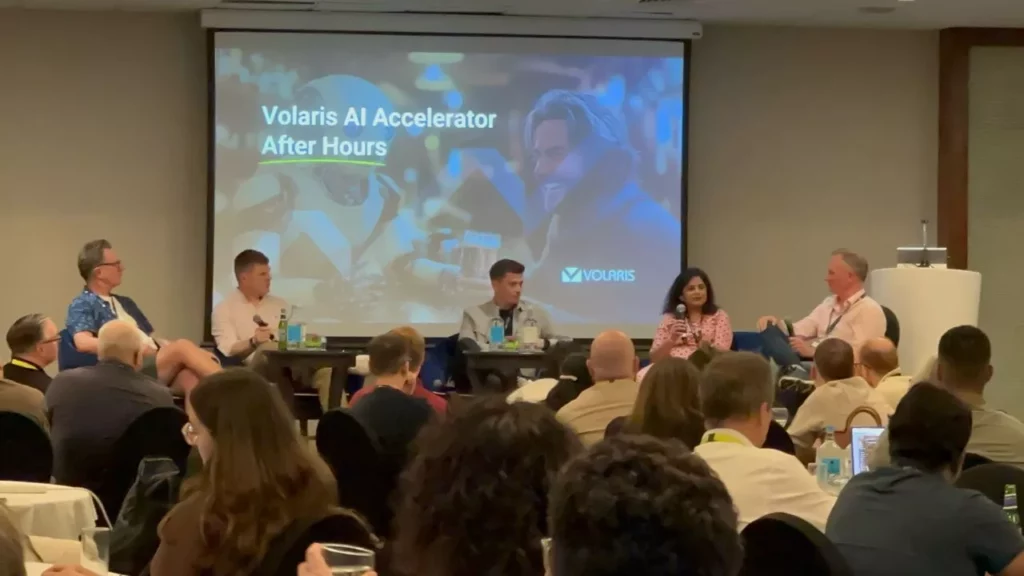
From the product leadership side of SSP, Sucheta has gone from learning to teaching. After a strong presentation at the Denver AI Accelerator in March, she was invited to present at another AI Accelerator in London and attended another AI Accelerator in Berlin as a coach.
Sharing her knowledge with the Volaris community is an enjoyable experience for her. “It’s really good fun to share what you’ve learned and work with other Volaris businesses on their own journey,” she reflects.
“If I can add value and share what I know, I’m more than happy to help. It’s quite rewarding to see other learners pick up the material and get to their final presentations.”
Looking ahead for SSP
After increasing their comfort with AI tooling and workflows in 2026, SSP has become more ambitious.
Next for SSP in 2027 is a bigger undertaking: modernizing their legacy platform, with proofs of concept on two paths — rewriting from scratch, or breaking the monolithic platform into modules. The team is looking at possibilities for a new user experience, with multilingual and multi-session capabilities and more agentic flows.
Meanwhile, they are eager to share what they have learned with peers in the Volaris network.
“It’s a big achievement for the SSP team to have delivered our product in 2027,” Sucheta says. “But sharing with the wider group is more rewarding for us, because we can share the journey.”
“We’ve gone through it,” she says. “We’ve seen the ups and downs.”