











With the business facing a looming retirement cliff, the team at WCS created newfound capacity and new revenue by increasing skills, tool adoption, and AI maturity
Volaris Group introduced the AI Accelerator in 2026, a program designed to upskill developers, product teams, and business leaders and help companies advance their AI maturity and fluency. This is a part of a series about the AI Accelerator and its impacts on our businesses.
Looking at how AI could help was a no-brainer for WCS (Worldwide Chain Stores), a Volaris Group business that builds warehouse and labor management software.
The company creates solutions for large, complex supply chains that move goods from one place to another — the kind that juggle multiple distribution centers and are found in retail, grocery, wholesale, pharmaceutical, beauty, and DIY businesses.
Going into 2026, the team was facing a problem that most businesses would love to have. They had won more business than they could immediately address. The WCS development team was the first to use AI to see how it could increase their capacity. They saw eye-popping results almost immediately, but suddenly, it meant the other parts of the business were scrambling to keep up.
Closing that gap was what led the WCS team to dig deeper into AI agents at Volaris Group’s AI Accelerator that they attended in London. After participating in the program, the team was able to bring their knowledge together while learning about the new tools. Now, the business has built and is piloting an AI releasing agent for warehouse operations, is in close conversations with interested customers, and has set an ambitious goal to transform the entire business with AI by the end of 2026.
WCS CEO Joshila Makan spoke with Acquired Knowledge about how she got her team to where they are, what they’re doing with their increased capacity, and their next steps.
What are the challenges facing your business right now, and how were you looking to apply AI to solve those problems?
We won millions in new business in 2024, and for the first time, at least 90% of what we won is new development, not implementation. The customer trusted us because we had the domain knowledge. But WCS is approaching a retirement cliff, which concerned me. Going into 2026, we turned to AI as a solution. Our senior architect trained an agent on our software and database, and once we gave it small modules, we saw 4x to 10x in gains in development.
Despite the productivity increase in one area of the business, I wasn’t seeing the gains end-to-end. AI writes code differently than a human does, so the issues coming out the other end were different too. Specing wasn’t getting faster, so we couldn’t feed developers fast enough, and testing had an even bigger backlog. Initially, it looked like we’d created more chaos than progress.
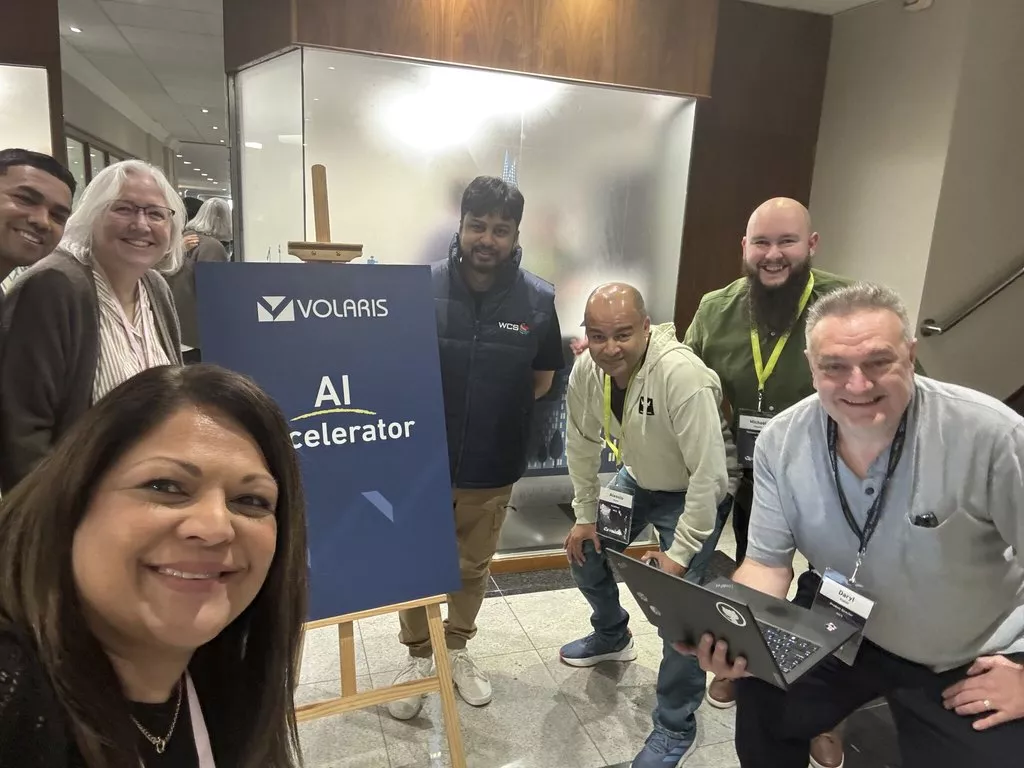
How did the AI Accelerator fit into your process of increasing AI adoption and maturity?
It landed at exactly the right time. I’d seen we could get 10x at the development level, but we hadn’t figured out speccing, testing, or how AI changes the work all the way through. It clicked that the AI Accelerator offered by Volaris Group would help me understand what needed to change in every division.
Initially, it looked like we’d created more chaos than progress.
What was your team’s experience at the AI Accelerator?
I went with six people from my team to the AI Accelerator, including some who held different views and could not see how their divisions connected. We went specifically to break that tension.
The accelerator gave the team a real foundation and showed us how to connect agents with proper handovers. It also surfaced things we hadn’t thought of — such as that you need an agent to review another agent’s work, and a dedicated security agent, since AI-generated code behaves differently all the way through the pipeline.
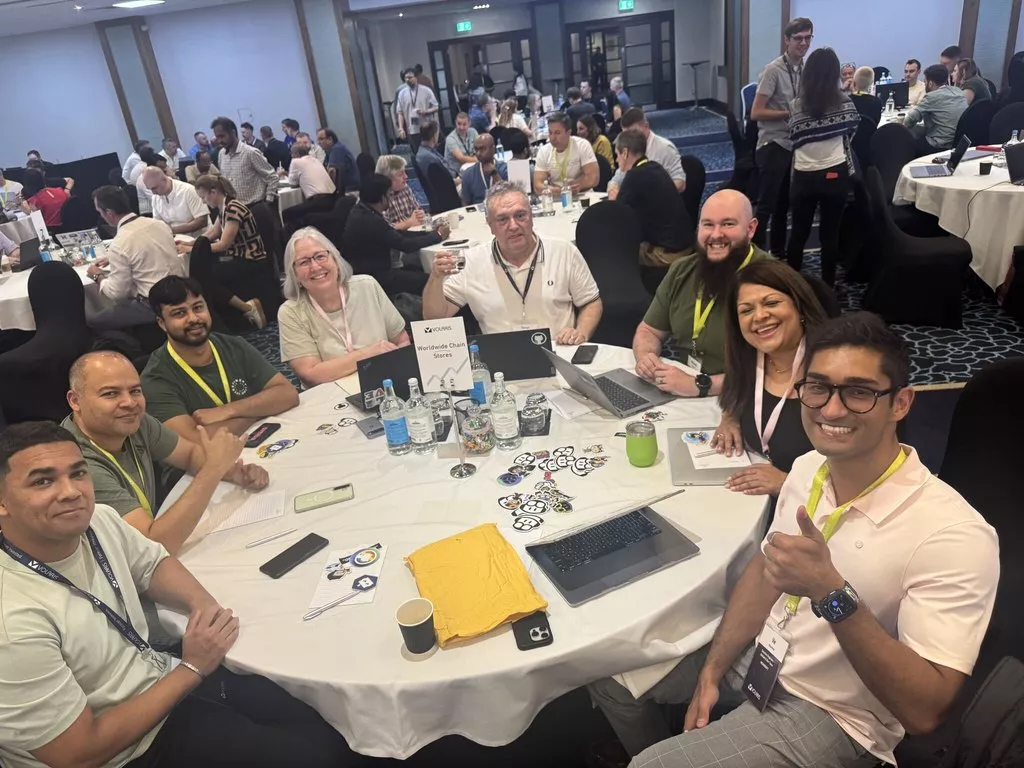
Where have you seen the clearest gains in your business because of what you have implemented?
We took an eight-step process and collapsed three of those steps using AI. We can now do the design, mock-up, and functional spec, plus a first draft of the tech spec and statement of work, in about two days. All of this is work that used to take weeks.
We’re less mature on release management and QA testing, which still need rebuilding. We run a weekly AI meeting per workstream, with a 90-day challenge to get every division to where AI is cutting human effort by 2x to 4x.
How did you prepare the organization to go through the changes that would be needed?
We decided to rip the band-aid off. I ran a town hall and was honest with the team. I said, “This isn’t an issue isolated to just our company or even within just Volaris, it’s a market-wide shift.” I told them we would all have to upskill, and that we would all be learning together. I was honest that jobs were changing, and that someone who might be used to writing code might spend the day reviewing code instead. But I was clear that these changes had to land within the quarter.
Some pushed back hard, people who’d been in this market for 32 years telling me they could already do it faster. I told them that the changes we would implement would make our workflows slower before they got faster. I asked our team how they would deliver everything on our books for 2026 otherwise. In other words, we didn’t really have a choice because we’d made promises to customers on an aggressive deadline, and implementing AI was our best way to keep them.
Did you encounter any resistance to your plan?
More than people not wanting to get on board, we saw a power struggle inside the business. Product started saying, “Why do I need a developer? I can just direct the AI and build the whole thing myself.”
We had to be clear that a single person can’t do the full end-to-end job. You still need a developer’s judgment to review the code, and an architect to sign off before anything production-grade goes live. AI speeds things up, but it doesn’t validate whether the output is correct.
What has deepening your team’s AI capabilities enabled your company to do?
Speeding things up just gives you more capacity. The real question is what you do with it to grow the business.
During the accelerator, we identified an agentic capability in our own supply chain application: a “releasing” agent. Take an example of a warehouse with fifteen distribution centers, two releasing staff per shift across three shifts. We created a pilot project, an AI agent that handles releasing while forecasting fulfillment capacity. This agent represents a real savings for our clients. We built the pilot and trained it, and then took it to the customer.

How did your initial conversation about the pilot project with the customer go?
The customer was interested but less far along than we were, so we worked through IT and security gateways with them to answer their questions: “What is this? How do we protect it? Where’s the kill switch?”
Out of the customer conversation, we built a framework any organization can use: a single pilot moving from human-monitored to human-reviewed to fully automatic over a quarter. Once a company’s been through it, they have a framework to reuse for other agents. The value isn’t just in the one solution; it’s embedding that framework into the organization.
We asked the customer to put skin in the game by investing in the pilot. In some cases, we’ve found it’s less about selling a solution and more about educating the customer on AI infrastructure and security before they’re ready to buy in at all.
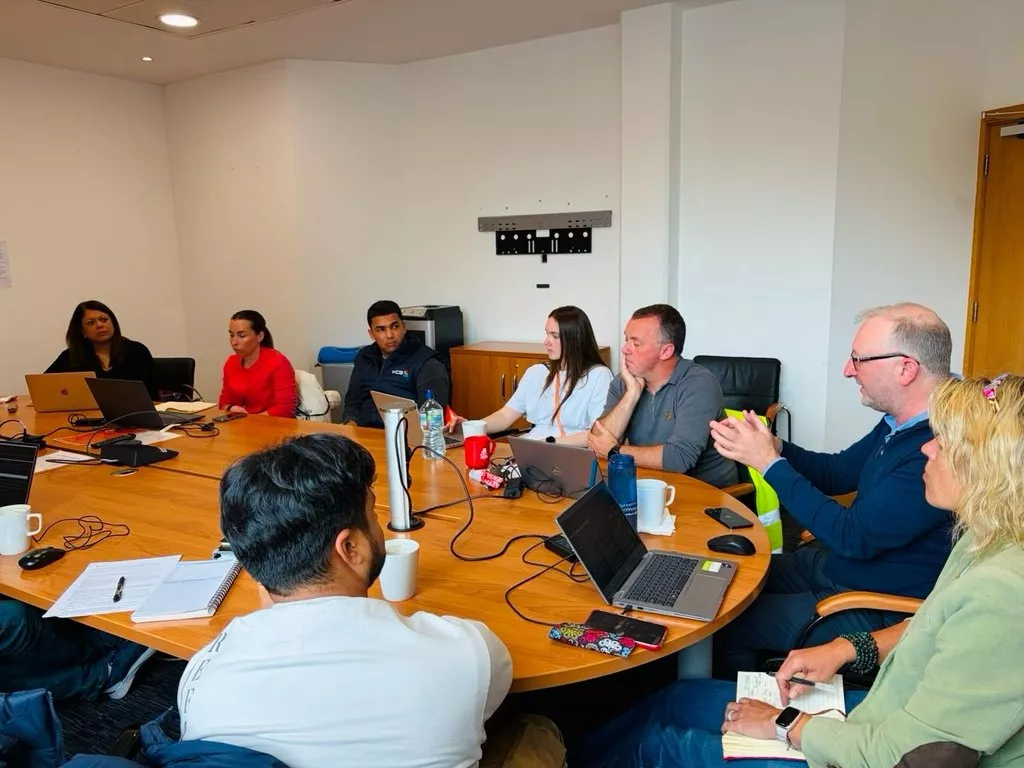
What’s your advice to other leaders who are looking to build more AI processes into their business?
Just rip the band-aid off. You’ll move faster than if you try to protect people from it. People aren’t naive; they already know it’s out there. And you can’t be half in, half out with AI. We learned that if you speed up one small piece of the business and leave everything else alone, you’ll just make that part of the team lazy without moving the business forward. You only get real gains if you transform your mindset, your people, your processes, and how you think about work, all together.
In thirty years in technology, I haven’t seen anything else create this kind of change from the top of an organization to the bottom and show up in revenue right away.
You can’t be half in, half out with AI. We learned that if you speed up one small piece of the business and leave everything else alone, you’ll just make that part of the team lazy without moving the business forward.
What are you looking to do next with respect to AI and business transformation?
By year’s end, the business needs to be transformed, full stop, with pilots locked in at two customers so next year’s innovation can build on it. WCS has always been on-premise, and if we don’t secure customer data properly we lose our stickiness — so new modules are moving to Azure, with data extraction restructured through an API or MCP layer.
WCS, in some cases, is well ahead of our customers, and if we don’t spend the next six months educating them, they may not be ready to adopt what we build. So we’re grouping customers into three tiers — those needing educating from scratch, those convinced but unsure how to bring it in-house, and those already ahead of the curve — with different conversations for each. We’re also planning to run something like our own accelerator with customers, pairing an idea with a product person and a developer to build and productize it.