










Volaris Group is introducing the AI Accelerator in 2026, a program designed to upskill developers, product teams, and business leaders and help companies advance their AI maturity and fluency. We are profiling some of the businesses that have participated in the program and are moving from AI experimentation to adoption and beyond.
Like creating a piece of art, software development is fundamentally an iterative process. A painter constantly builds upon previous steps — layering, adjusting, and refining the piece over time. Every brushstroke informs the next, and this back-and-forth cycle of action and observation is what brings the artwork to life.
Creating software can be seen in the same way. That’s certainly how Gallery Systems sees it. The Volaris-owned business creates collections management software for museums, cultural institutions, and commercial art galleries, and they sent a cross-functional team to Volaris Group’s AI Accelerator because they wanted to create an even faster and more iterative process for software development.
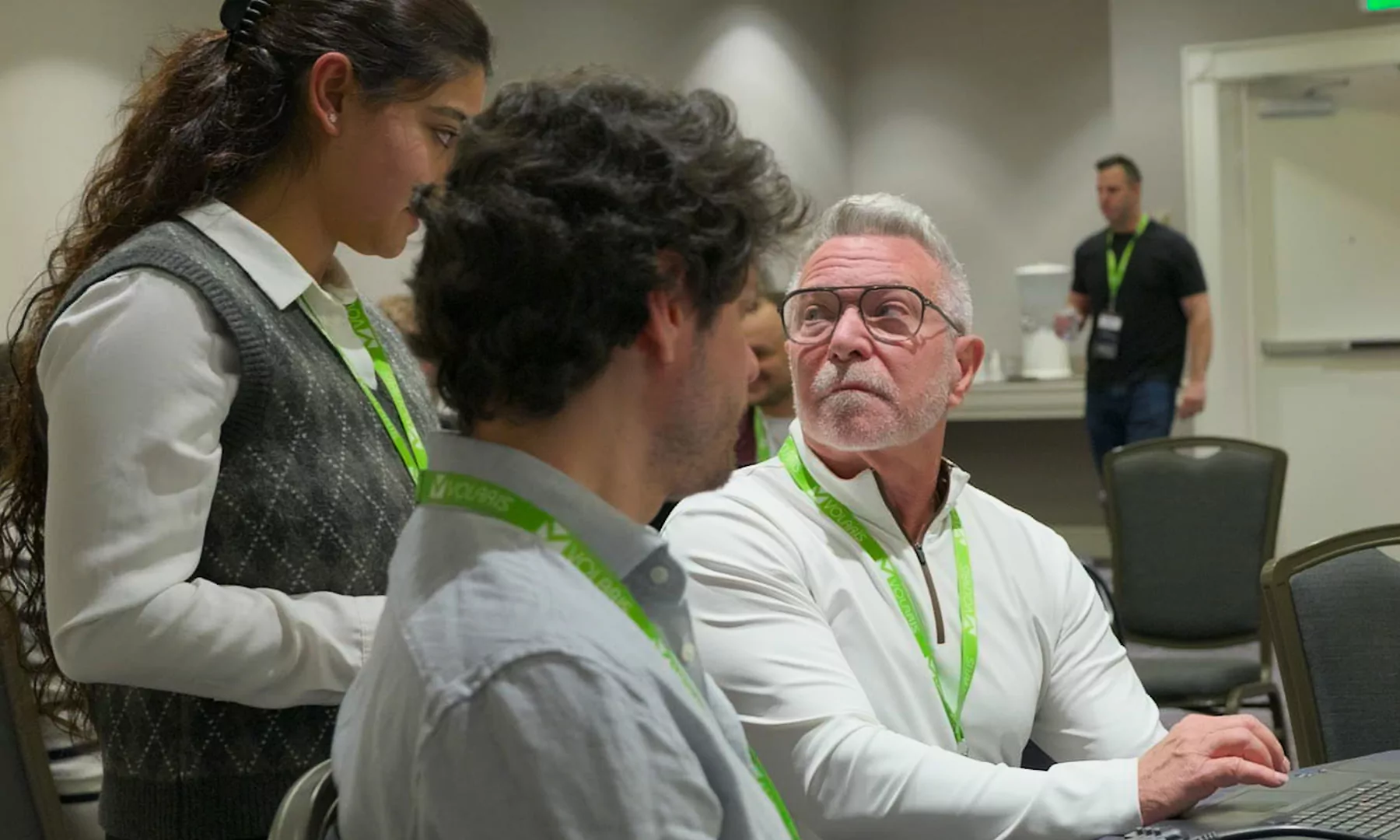
The in-person, multi-day immersive event gave the team a chance to step out of their day-to-day tasks, figure out how to rapidly integrate AI tools into their product development and operations, and return to their business with prototypes, new workflows, and a changed sense of what’s possible.
Leading a company’s cultural and mindset shift
Accelerating the team’s AI knowledge and improving their operating framework were the key motivations for attending the event. Paul Thyssen, General Manager of Gallery Systems, spoke about the urgency driving the trip: “We’ve had a great start on it so far, but we need to really move faster — because every day and every week, everything is changing so fast.”

The AI Accelerator reinforced an effort that Thyssen has been working on for some time — creating the cultural change required for AI adoption within a company, which he views as being as important as the technical shift.
One of his key takeaways was how beneficial it can be to move away from the more traditional Agile sprint methodology toward something faster and more iterative. “That’s one of the things we’ve been doing here over these few days — and if we can do that here, we can bring that back to the team,” he said.
I’ve really got to help the team shift their mindset — coach them into moving away from the old ways of doing things and think about being more open-minded, making that change.
-Paul Thyssen, General Manager, Gallery Systems
Product perspective: Discovering what they didn’t realize they didn’t know
Director of Innovation Alex Hoffman arrived at the event with a defined agenda, and after incorporating the ideas they picked up from the event, they left with an even longer to-do list.
Although he is the company’s GM, Thyssen joined the product track to get a clear sense of the possibilities on that side of the business. He worked side-by-side all week with Hoffman, and they spent the first day of the event evaluating documentation, building user personas, and feeding information into AI tools to surface ideas that traditional market research might have missed.
The process created value not just by generating new ideas, but by helping the team articulate issues they already sensed were there. “It put our problems into words for us,” Hoffman said.
Achieving that clarity helped them identify foundational improvements they needed to make before tackling their most ambitious goals. Hoffman said the iterative rhythm of the AI Accelerator reinforced their instinct, comparing the rapid cycles of work followed by reflection to being similar to applying “multiple coats of paint” as they learned and then applied their ideas immediately.
AI has really affected my job. It feels like it’s opened up so many doors and created this new chapter in my life where I can start to learn all these development tools and really expand my knowledge.
-Nicholas Pretel, Developer, ArtBinder (sister company of Gallery Systems)

Developer perspective: AI as a bridge for career growth
One of the most striking transformations for the team is happening at the individual level.
Nicholas Pretel builds software for ArtBinder, a sister company to Gallery Systems, and he sees AI-supported coding as a bridge for his growth as a software developer. That support has been most valuable when navigating the intimidating scale of a large existing codebase. Pretel describes his previous situation as a developer as feeling daunting, especially when he had to step into a project ten years in the making to try and catch up.
But he says AI has made that task feel more manageable. One of the tools he found most useful was spec-driven development — a methodology in which developers write detailed specifications before writing code, and use AI to validate those specs through iterative questioning.
“It feels like a safety blanket,” he says of the approach to development. “It feels like having a senior developer who gives me a good summary of where I can go with all these tools. Before I make any implementations or make any big changes, it goes through to make sure everything’s good, and I’m not missing anything.”
The AI Accelerator experience accelerated that trajectory further. “Once I jumped into development using AI platforms, it really was like a cannon that shot me out and threw me deep into the deep waters of development,” he said.
Looking ahead to after the event, Pretel saw the potential for a cascade effect within the company as he plans to share his learnings. “When I come back to the team, I’m going to have so much to give in terms of things that we can automate and make so much easier.”
He adds: “Our creativity hasn’t been allowed to flow as much because we’ve been held back by needing time to work in two-week sprints. Now we can work much faster and start to put more features in — and give the clients back more of what they want.”
My advice would be to, first of all, get engaged with your customer and talk to them, find out what their concerns are, and basically get on the same side of the table with them. You really have to understand your customer.
-Paul Thyssen, General Manager, Gallery Systems
Leading customers at a pivotal turning point
Leading and staying ahead of trends extends to their relationship with clients. Museum and gallery clients have historically been cautious about new technology, especially when it involves their collections data. He shared: “My particular customers are often worried about different things. Sometimes it’s intellectual property, sometimes it’s the energy consumption the data centers use.”
Thyssen has been managing that tension carefully. At an international client event in spring 2025, he brought in an AI educator as a keynote speaker, giving clients an accessible entry point into the topic.
The message Gallery Systems has been sending to clients is clear: their data isn’t being used to train models, and any AI collaboration would be opt-in only. However, the company has also let customers know that if they are interested in working with AI and their data, the Gallery Systems team would be very interested.
His overall approach has been to listen closely to customers before pushing and to address their concerns and sensitivities. “We took a softer approach, and that seems to work well.”
For a company serving institutions that have preserved art for centuries, moving at the speed of AI is a new kind of challenge. But if the Gallery Systems team’s experience at the AI Accelerator is any indication, the tools are meeting them where they are — patient enough to answer every question and fast enough to support their most ambitious goals.